
Claim Your Free Estimate Today

Table of Contents
- What Is a Water Heater Expansion Tank and Why It Matters
- Common Signs Your Expansion Tank Is Leaking
- How Thermal Expansion Causes Tank Failure
- How to Test Your Water Heater Expansion Tank
- Water Heater Expansion Tank Lifespan and When to Replace
- Water Heater Expansion Tank Replacement Cost and Repair Options
- Maintenance Schedule to Prevent Future Leaks
- Frequently Asked Questions
Last Updated: October 1, 2026
What Is a Water Heater Expansion Tank and Why It Matters
A water heater expansion tank is a small pressurized vessel that absorbs excess water pressure when your water heater heats water, and recognizing expansion tank leaking signs early prevents costly damage. In a closed-loop plumbing system, expanding water has nowhere to go without it, so the tank provides a safe space for that pressure to release, protecting your entire plumbing system from damage.
Think of it as a shock absorber for thermal expansion. Without it, pressure builds inside your water heater and pipes, damaging fittings, valves, and the tank itself over time.
Most homes have expansion tanks installed near the water heater or on the cold water supply line. They’re typically small cylindrical tanks with a valve at the top. We help homeowners understand why these tanks fail and what the warning signs mean.
The expansion tank contains two chambers separated by a flexible diaphragm or bladder. One side holds pressurized air; the other fills with water as pressure builds.
Common Signs Your Expansion Tank Is Leaking
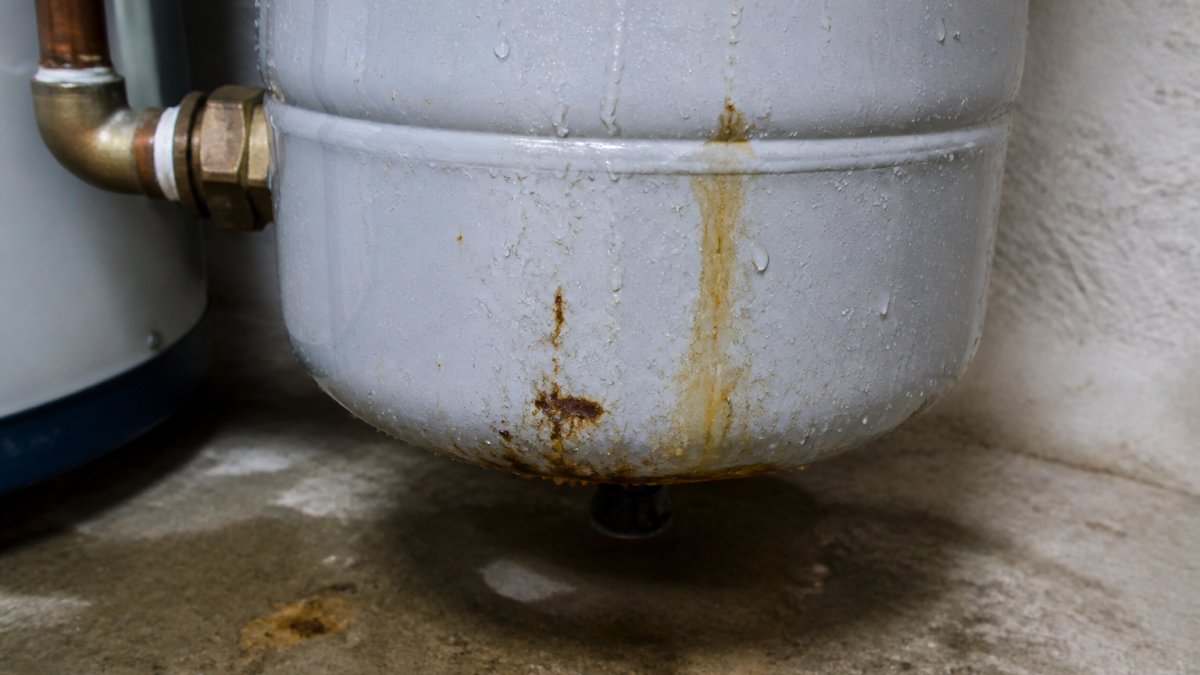
Visible Water Pooling Around the Tank
Water pooling beneath or around your expansion tank is the clearest sign of a leak. Check directly under the tank, around the base where it connects to piping, on the floor near the water heater, and along the cold water inlet line. Wipe the area dry, wait a few hours, and check again. If moisture returns, the tank is leaking.
Pinhole Leaks and Rust Stains
Pinhole leaks are tiny holes in the tank wall where water sprays or drips steadily. Look for rust stains running down the tank side, discoloration around fittings and seams, or orange/brown streaks on the exterior. Rust stains indicate the tank’s metal is corroding from the inside, a red flag that internal failure is underway.
Condensation vs. Actual Leaks
Not all moisture means the tank is leaking. Condensation forms on cold tank surfaces when warm, humid air contacts them. Condensation appears as light beading, dries quickly, and feels cool. Actual leaks pool or drip from specific spots, return within minutes after wiping, feel warm, and leave rust stains. To test, wipe the tank dry, mark the area with tape, wait 30 minutes without using hot water, and check again.
How Thermal Expansion Causes Tank Failure
When water heats from 60°F to 140°F, it expands by about 2 percent, several gallons of extra water with nowhere to go in a closed system. Without an expansion tank, this pressure weakens metal, cracks welds, and damages valves over time. The expansion tank’s diaphragm absorbs this pressure safely, but it flexes thousands of times per year and eventually fatigues, cracks, or ruptures.
How to Test Your Water Heater Expansion Tank
Testing your expansion tank tells you whether it’s working properly or failing. You can perform two simple tests yourself. Both take just a few minutes.
Pressure Gauge Testing
A pressure gauge test measures the air pressure inside your expansion tank. Turn off your water heater and let it cool, then attach a tire pressure gauge to the Schrader valve on top of the tank. In most homes, pressure should be 12-15 psi if your incoming water pressure is 40-60 psi. If the gauge reads zero or very low, the tank is waterlogged and needs replacement.
The Tap Test for Waterlogging
Turn off the water heater, turn on a hot water tap, and note how long hot water flows before it turns cold. Repeat three times. A working tank provides steady flow; if hot water stops abruptly or flow is weak, the tank may be waterlogged. If hot water duration has decreased compared to previous tests, the tank is failing and needs replacement.
Water Heater Expansion Tank Lifespan and When to Replace
Most expansion tanks last 5 to 10 years. Replace your tank if it’s over 10 years old, shows zero or very low psi on a pressure gauge, has visible leaks or rust stains, is waterlogged, or has water pooling around the base. Don’t wait for catastrophic failure, a failing tank can damage your water heater or cause pressure spikes that damage plumbing throughout your house.
Water Heater Expansion Tank Replacement Cost and Repair Options
Can It Be Repaired?
Most expansion tanks cannot be repaired because the diaphragm or bladder inside cannot be replaced in the field. Some professionals attempt to recharge the air pressure in a waterlogged tank, but this is a temporary fix. When a diaphragm ruptures or develops micro-tears, recharging does nothing to seal those tears, the diaphragm continues to leak air back out within days or weeks.
Claim Your Free Estimate Today →
Cost-Benefit Analysis: Repair vs. Replacement
For accurate pricing specific to your situation, contact a licensed plumber for a free estimate. Most homeowners find that replacement is more economical than repair, especially for tanks over 8 years old. Delaying replacement can lead to more serious plumbing damage from unchecked thermal expansion and pressure spikes, which may cost significantly more to repair.
Maintenance Schedule to Prevent Future Leaks
Regular maintenance extends your expansion tank’s life and catches problems early. More importantly, it prevents the thermal stress that causes diaphragm failure in the first place.
Understanding Why Maintenance Matters
Your expansion tank’s diaphragm flexes thousands of times per year as water heats and cools. Each cycle stresses the rubber material. Over time, this repeated stress causes micro-tears and fatigue. Maintenance doesn’t stop this process, nothing can, but it slows it down by keeping your system operating at optimal pressure and temperature.
Recommended Maintenance Schedule
Every 3 months: Visually inspect the tank for leaks, rust stains, or corrosion; check for water pooling; feel for unusual warmth or cold spots; listen for hissing sounds. Seasonal changes affect water temperature and usage patterns, so quarterly checks catch seasonal stress before it causes visible damage.
Every 3 years (preventive maintenance):
- Flush sediment from the water heater (sediment buildup increases internal temperature and pressure, stressing the expansion tank)
- Inspect the anode rod in the water heater (a corroded anode rod allows the tank to rust, which can cause leaks that are mistaken for expansion tank failure)
- Test the expansion tank’s air pressure and compare the trend to previous years (a consistent decline is normal; a sudden drop indicates imminent failure)
Every 5 years (replacement planning):
- Schedule a professional inspection and pressure test
- Ask the technician to estimate the tank’s remaining lifespan based on pressure trends and visual condition
- If the tank is approaching 10 years old, begin budgeting for replacement (don’t wait for failure)
- Check the manufacture date on the tank (usually stamped on the side or top); if it’s over 8 years old, replacement within the next 12 months is prudent
Maintenance Prevents Cascade Failures
A failing expansion tank doesn’t just leak water. It causes pressure spikes throughout your plumbing system. These spikes damage:
- The water heater’s internal tank (leading to rust and leaks)
- Pipe fittings and solder joints (leading to pinhole leaks in walls and ceilings)
- The T&P valve (leading to constant dripping and water waste)
- Washing machine inlet valves and dishwasher connections (leading to leaks inside appliances)
An expansion tank replacement prevents significant downstream damage. Maintenance catches the problem before cascade failure occurs.
DIY vs. Professional Maintenance
You can perform visual inspections and pressure testing yourself with a tire pressure gauge. However, a professional inspection every 1-2 years is worth the cost. Professionals can:
- Measure your home’s water pressure (high pressure accelerates tank failure)
- Inspect the water heater for signs of pressure damage
- Test the T&P valve for proper operation
- Identify corrosion or connection issues you might miss
- Provide documentation of tank condition for warranty or insurance purposes
A professional inspection can extend your tank’s life by catching problems early. It’s one of the best investments you can make in your water heater system.
Frequently Asked Questions
What are the signs that my water heater expansion tank is leaking?
The most visible signs include water pooling or dripping around the tank base, rust stains on the tank surface, and wet spots on the floor or nearby walls. You may also notice a hissing sound from the tank or a sudden drop in water pressure. Pinhole leaks are common in older tanks and appear as tiny water sprays. Not all moisture means a leak, condensation forms on the tank exterior when cold water enters, especially in humid climates. If you’re unsure, a professional plumber can test the tank pressure and identify whether you have condensation or an actual leak.
What is the life expectancy of a water heater expansion tank?
Most expansion tanks last 5 to 10 years, depending on water quality, pressure conditions, and maintenance. Tanks in areas with hard water or high mineral content tend to fail faster due to sediment buildup and corrosion. The diaphragm or bladder inside the tank, the flexible membrane that absorbs thermal expansion, degrades over time and becomes less effective. If your tank is approaching 8 years old and showing signs of leaking, replacement is typically more practical than repair. Regular maintenance and annual pressure checks can help extend tank life.
How do I test my expansion tank to see if it’s waterlogged?
A waterlogged tank has lost its air charge and can no longer absorb pressure spikes from thermal expansion. The simplest test is the tap test: gently tap the tank with a hammer or wrench. A hollow sound indicates proper air charge; a dull, heavy thud suggests the tank is waterlogged. For a more precise check, use a tire pressure gauge on the Schrader valve (the small valve on top of the tank). Most tanks should read 40 psi when the system is depressurized. If the reading is zero or very low, the tank is waterlogged and needs replacement.
What is the average cost of replacing an expansion tank?
Expansion tank replacement cost depends on tank size, your location, and labor complexity. For accurate pricing specific to your situation, contact a licensed plumber for a free estimate. Most homeowners find that replacement is more economical than repair, especially for tanks over 8 years old. Delaying replacement can lead to more serious plumbing damage from unchecked thermal expansion and pressure spikes, which may cost significantly more to repair.
